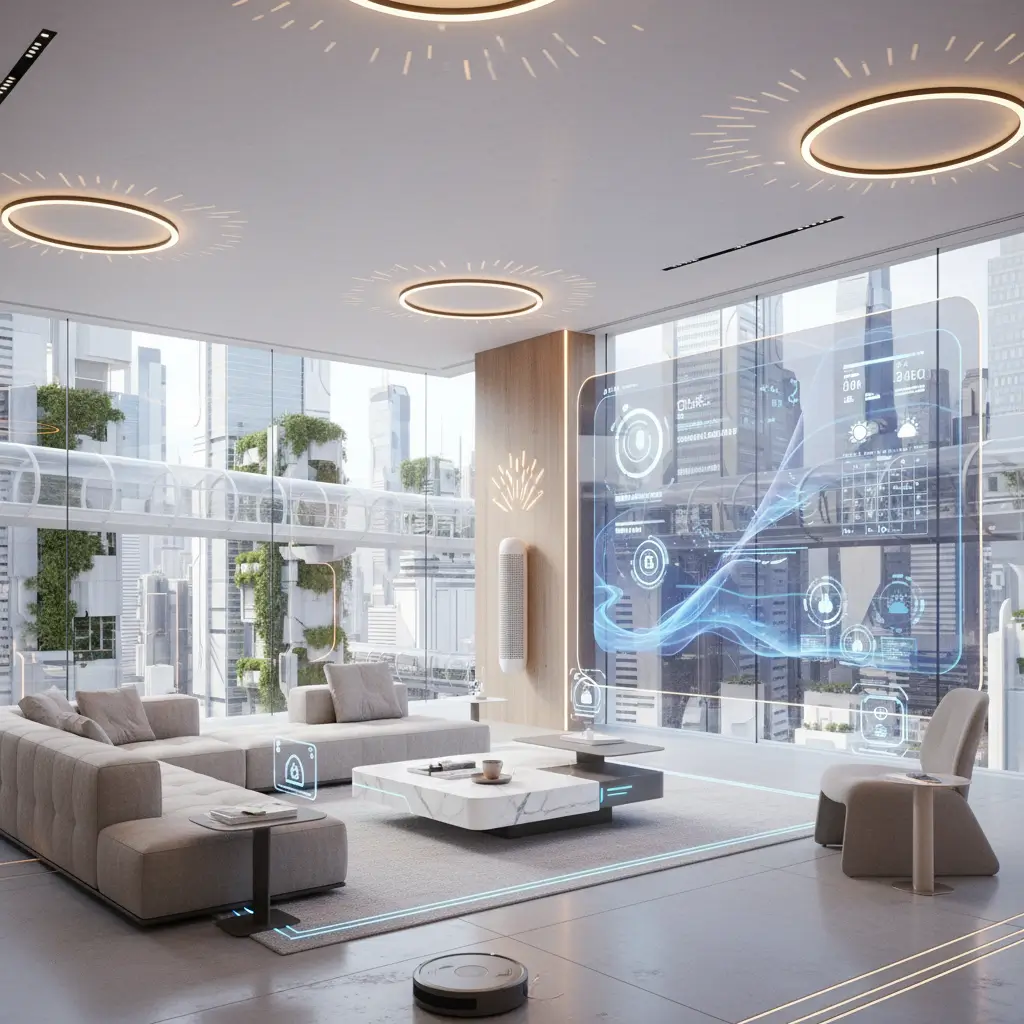

The real estate market of 2026 is driven by a generation of buyers—specifically Millennials and Gen Z—who prioritize operational excellence over traditional aesthetics. Data from 2026 housing reports indicate that over 78% of home buyers now actively seek out properties with pre-installed smart features. This demand has created a tangible “tech premium,” where smart-enabled homes are selling up to 10% higher and significantly faster than their traditional counterparts.
1. The “Invisible Luxury” of Background Automation
One of the defining trends of 2026 is the move away from flashy gadgets toward seamless background automation. Modern buyers are no longer impressed by a lightbulb that changes color via an app; they want a home that anticipates their needs through what experts call “Agentic AI.”
- Circadian Wellness Lighting: Advanced systems like Lutron’s Ketra now adjust the color temperature and intensity of indoor lighting to match the natural rhythm of the sun. This supports mental health, improves sleep-wake cycles, and is a major selling point for “wellness-certified” luxury listings.
- Predictive Climate Control: Using on-device AI and occupancy sensors, these homes learn the specific routines of the household. Instead of a set schedule, the home reacts in real-time, cooling the home office only when it detects you are starting your workday.
- Automated Maintenance Alerts: In 2026, the “smart” home tells you when it’s sick. Sensors in the HVAC system or water heater can detect minute changes in vibration or pressure, alerting the owner to a pending failure before it becomes an emergency. For buyers, this reduces the “fear of the unknown” that often comes with purchasing an older property.
2. Security as a Core Value Proposition
In 2026, home security has evolved from simple alarms to intelligent monitoring ecosystems. Standard features now include:
- Touchless Biometric Access: Fingerprint and facial recognition locks (like those from Lockin and Kwikset) have replaced physical keys. This offers higher security and makes “self-guided tours” easier for real estate agents during the sales process.
- AI-Driven Threat Detection: Modern security cameras can now distinguish between a delivery person, a neighbor’s pet, or a genuine intruder, virtually eliminating false alarms. Some systems even coordinate across neighborhoods to share “anonymized threat data,” improving local awareness.
- Secure Parcel Management: As e-commerce remains the primary shopping method, integrated smart lockers or “delivery porches” with encrypted access codes are now considered essential amenities.
3. Energy Efficiency: The “Green” ROI
With global energy prices remaining high, a home’s Energy Intelligence Quotient (EQ) is now a top-tier metric for appraisers. Buyers are looking for properties that function as “active assets” rather than “passive liabilities.”
- Matter and Thread Interoperability: In 2026, the “Matter” protocol has solved the problem of mismatched apps. One single ecosystem now controls lighting, heating, and appliances regardless of the brand, making the tech accessible to non-technical buyers.
- Grid-Interactive Efficient Buildings (GEB): The most valuable homes in 2026 are those that can talk to the electrical grid. These homes automatically shift heavy energy tasks to “off-peak” hours, saving the owner thousands of dollars annually without any manual effort.
4. Health and Wellness Tech: The New Amenity
Following the global shift toward home-centric living, “Health Tech” has moved from the gym into the walls of the house.
- Indoor Air Quality (IAQ) Monitoring: Real-time tracking of CO2, VOCs, and particulate matter is becoming a standard feature in new builds. Smart humidity sensors can now automatically trigger bathroom fans or whole-home dehumidifiers to prevent mold growth before it starts.
- Smart Water Management: Systems that monitor for micro-leaks (like Moen’s Flo) not only save money but protect the structural integrity of the home. Insurance companies in 2026 are increasingly rewarding these installations with significantly lower premiums.
5. Future-Proofing: The “Digital Backbone”
For sellers, the message is clear: a home without a robust digital backbone is perceived as “obsolete” by the 2026 buyer.
- Whole-Home Connectivity: High-speed Wi-Fi 7 and hardwired Ethernet for home offices are now viewed similarly to how high-quality plumbing was viewed fifty years ago.
- EV-Ready Infrastructure: A smart garage with an integrated Level 2 charger and home energy storage (like a Tesla Powerwall) is the “new granite countertop”—a high-impact upgrade that pays for itself in resale value.
6. The Psychological Shift: Convenience vs. Status
While smart tech used to be about “status,” in 2026 it is about reducing friction. Buyers are looking for a lifestyle that adapts to them. A house that can unlock itself as you approach with groceries, or a kitchen with an AI-vision fridge that manages your grocery list, is seen as a tool for “buying back time.” In a fast-paced world, convenience is the ultimate luxury.
Final Verdict: The Intelligence Premium
As we look at the real estate landscape of the mid-2020s, technology has moved from a novelty to a necessity. Homes that “think” are more than just convenient; they are more secure, more sustainable, and ultimately more valuable. For investors and homeowners alike, the “Smart Standard” isn’t just about the gadgets you can see—it’s about the intelligent environment that works quietly in the background to improve every aspect of residential life.